Oral Health
This chapter provides guidance for promoting student oral health through prevention, education, dental care awareness, and school-based support.
Introduction
Promoting oral health in the school setting is important to reduce the incidence of oral disease, such as tooth decay, which is a preventable condition. Tooth decay is one of the most common chronic diseases among school aged children. School administrators, nurses, counselors, teachers, students, and parents should promote school-based or school-linked oral health services.
The 2000 US Surgeon General Report, Oral Health in America: A Report of the Surgeon General, states that over 51 million school hours are lost each year due to dental-related illness. Children from lower socioeconomic levels suffer nearly 12 times more than children from higher income families. Pain and suffering due to untreated oral diseases can lead to problems with eating, speaking, and attending school. A healthy child will learn and contribute to society in later years. School-based or school-linked oral health prevention programs should provide good oral health education, preventive services, assist students in obtaining dental care, and integrate oral health into the school curriculum (US Surgeon General, 2000).
The Association of State & Territorial Dental Directors (ASTDD) recommends the promotion of good oral health practices that improve oral health of school aged children and adolescents through education, networking, and collaborative partnerships at local, state, and national levels. We should strive to ensure a strong oral health component in all schools and adolescent health initiatives.
This chapter is aimed to help school nurses, school administrators, and teachers educate children and adolescents to highlight the importance of oral health, support life-long healthy behaviors, encourage preventive care, and treatment as recommended by the ASTDD. This chapter also will present some of the best practice approaches proposed by the ASTDD to prevent oral disease.
For more information, see:
- US Surgeon General. (2000). Oral health in America: A report of the Surgeon General. National Institute of Dental and Craniofacial Research. Accessed July 28, 2022, https://www.nidcr.nih.gov/research/data-statistics/surgeon-general.
- ASTDD. (2017). Best practices approach for state and community oral health programs. https://www.astdd.org/bestpractices/wscc-bpar-final-3-2017.pdf.
What is Oral Health?
The World Health Organization (WHO) states that oral health is “a state of being free from chronic mouth and facial pain, oral and throat cancer, oral infections and sores, tooth decay, gum disease, tooth loss, and other diseases and disorders that limit the individual’s capacity of biting, chewing, smiling, speaking, and psychosocial wellbeing.” Oral health is important, because “the mouth is the gateway to the body” (US Surgeon General, 2000). Oral diseases can result in pain, disability, poor nutrition, and dysfunctional speech, which have a negative impact on the individual’s quality of life, their performance at school, work, and their success in life.
The surgeon general’s report recognizes “the mouth as the mirror of the body,” because many general health problems can be manifested in the mouth and detected in a regular oral examination. Therefore, oral health complications can reflect general health conditions or aggravate them. For example, periodontal disease can be the manifestation of advanced diabetes and at the same time may worsen a diabetes condition. Periodontal disease can be associated with low birth weight, respiratory disease, cardiovascular disease and coronary heart disease. In some cases, bacteria from an untreated tooth infection or gum disease spread to the brain causing even death (Advancing Oral Health in America 2011).
A healthy oral cavity has fresh breath and pink gums, it is cavity-free, it has no prematurely missing teeth, and it has proper space to fit the teeth. Maintaining a healthy oral cavity promotes good overall health. The oral cavity is not healthy if it has missing, decay, broken, loose, or shifting teeth, or gums that have sores, are red, swollen, or tender. When any of these abnormal conditions exist, dental disease can develop, and the oral cavity cannot function properly. The food cannot be chewed properly or completely before swallowing, leading to digestive problems. An individual with dental problems may limit food selection to soft foods that do not require chewing. Limited food selection may lead to an unbalanced diet. As a result, the body's general health and development suffer. Children who have poor oral health often miss more days of school and receive lower grades than children who have good oral health.
See ASTDD. (2017). Best practices approach for state and community oral health programs. https://www.astdd.org/bestpractices/wscc-bpar-final-3-2017.pdf.
Structures of the Mouth
To understand the cause and progress of oral disease, it is important to have an overview of the structure of the mouth.
General Anatomy
The mouth is where the digestive tract begins. It can be thought of as a hinged box (Figure 1). The top of the mouth is the hard palate; the back of the mouth is the soft palate. The sides of the mouth are the stretchy cheeks and at the bottom of the mouth is the tongue. The lips form the front of the box and act as the opening. The mouth is the only part of the digestive system with nerve endings that respond to taste, pain, pressure, and temperature. The opening at the back of the mouth is shared by both the respiratory and digestive systems. The tongue aids in swallowing and talking. It also has many papillae (small projections on the tongue). Taste buds are concentrated in these papillae.
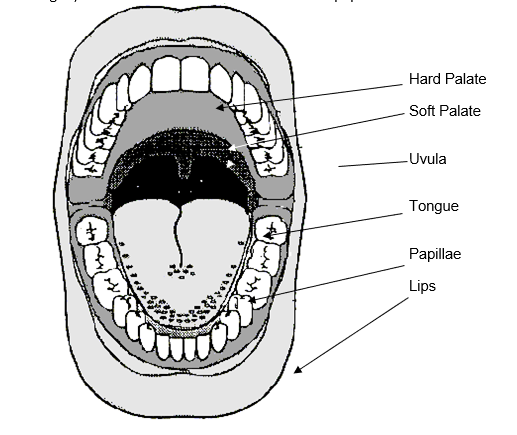
Figure 1: Anatomy of the Mouth.
The Lips are the visible edges of the mouth. They are two fleshy folds that surround the mouth in humans and some animals.They are soft movable, and serve as the opening for food intake. Normally they are pink or red, and essential for speech.
The Teeth are a set of hard, bone-like structures rooted in sockets in the jaws. They are composed of several layers and they are essential for speech, biting, and chewing.
The Gums are the soft tissue covering the neck of the teeth and the bone of the jaws broadly. Normally, gums are pink.
The Tongue is a muscle attached to the floor of the mouth that is used for tasting and eating food. Also, it is fundamental for speaking.
The Palate is the roof of the mouth. On the anterior portion, the palate is hard. On the posterior portion, the palate is soft. It is fundamental to swallow the food and to speak.
Teeth
There are two sets of teeth during an individual’s lifetime. These are referred to as your primary and permanent teeth respectively. The primary and permanent teeth work together to serve several functions for the body. First, they aid in eating food by breaking it into smaller particles, which, along with enzymes present in saliva, begins digestion. The saliva softens and lubricates the food while the teeth break down the food mechanically and initiates chemical digestion by changing starch to sugar.
Secondly, saliva and teeth are important in speech and language. The wetting action of saliva aids in speech while the teeth form the structure the tongue uses to make sounds.
Finally, teeth affect the appearance of an individual. How an individual feels about his or her smile, mouth, and teeth may affect his/her self-image. Teeth also help maintain space in the mouth, preventing malocclusions. The primary teeth are especially important in these functions because they are the teeth that are initially present when a young child begins to eat, speak, and develop a self-image.
Primary Teeth
There are 20 primary teeth (Figure 2). They erupt, starting with the lower front teeth, around 4–6 months of age. The last primary teeth to erupt are the second molars. They come in around 20–24 months of age. Most babies are born without any visible teeth, but the crowns are under the gums ready to erupt. Some newborns have teeth erupted at birth time which is also normal. At age of 3, the eruption of primary teeth is complete.
Primary teeth are important for child’s language development, good nutrition, and for physical and emotional development. Primary teeth also help maxillary bone to grow and maintain space for permanent teeth, preventing malocclusions.
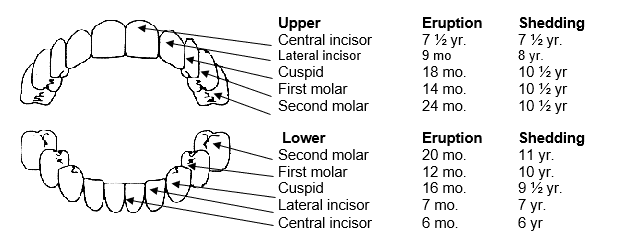
Figure 2: Primary Teeth.
Permanent Teeth
The permanent teeth develop under the primary teeth replacing them. Starting around age 6, the first permanent molar erupts, and the primary teeth begin to fall out.
Permanent teeth follow the same basic sequence of eruption as primary teeth (Figure 3). Adults have a total of 32 teeth, including wisdom teeth.
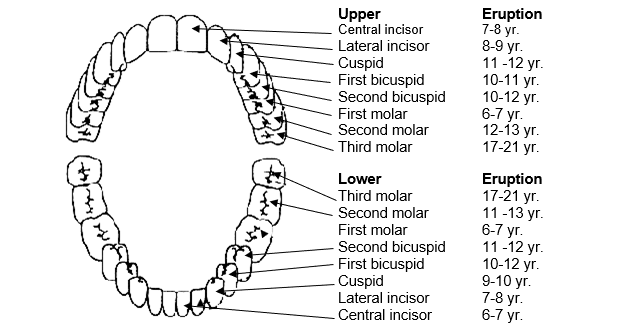
Figure 3: Upper and Lower Teeth.
Parts of the Teeth
Each tooth is comprised of different parts and types of tissues. The visible portion of a tooth in the oral cavity is the dental crown and the portion bellow the crown and immersed in the jawbone is the tooth root. The tooth is composed by layers. In the crown the most external layer is the enamel, followed by the dentin and pulp, which is the most internal layer. The most external layer of the root is the cementum, (which replaces the enamel of the crown), followed by the dentin and the pulp. The teeth are secured into the jawbone by the periodontal ligament.
The tissues are the same for every tooth (Figure 4). They include:
- Enamel: a hard, white outer covering the crown.
- Dentin: the yellowish, calcified tissue underneath and supporting the enamel, forming the bulk of the tooth.
- Pulp: the soft tissue that contains blood vessels, nerves, and lymph vessels; the center of the crown and roots; the sensory center of the tooth.
- Cementum: the thin, bone-like tissue that covers the root of the tooth and attaches the tooth to the surrounding bone.
- Periodontal ligament: the layer of tissue fibers between the cementum and bone that connects the root to the jawbone and cushions the tooth from pressure and jolts.
- Gum: (gingival tissues): the tissues which cover the alveolar bone of the upper and lower calcified connective tissue that surrounds and supports the tooth.
- Root canal: the portion of the pulp cavity that is located in the root of the tooth.
- Bone: the dense, semi-rigid, porous, calcified connective tissue that surrounds the neck of the teeth and supports the tooth.
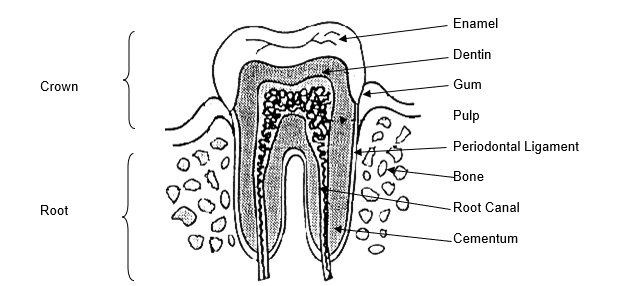
Figure 4: Parts of the Teeth.
Tooth Shape
The teeth have different names and shapes according to their function. The incisors, or front teeth, are often called the cutting teeth. These teeth have a thin edge that allows the teeth to "cut" into some foods. They also help to pronounce words. The cuspids (or eyeteeth/canines) are the third teeth from the middle; they each have a pointed edge that tears food. The bicuspids/premolars have a large, flat surface and crush the food into pieces. These teeth replace the primary molar teeth around 10 ½ years of age. The molars are the largest teeth at the very back of the mouth. They have large chewing surfaces and grind food into smaller particles (Figure 5).
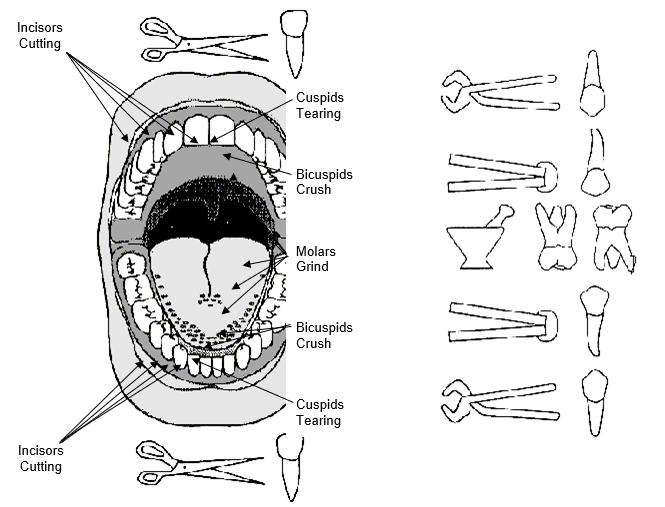
Figure 5: Tooth shape.
Oral Disease
Oral disease refers to tooth decay, gum disease, oral cancer, and other issues. Dental plaque is the most common cause of tooth decay and gum disease. Tooth decay and gum disease can lead to missing teeth. Oral cancer is associated with unhealthy behaviors such as smoking tobacco, e-cigarettes, and HPV contamination. Other oral infections may happen secondary to piercings in the mouth.
Dental Plaque
Dental plaque results from the accumulation of little pieces of food, bacteria, and saliva that collect on the teeth, especially along the gum line and in the crevices on the chewing teeth surfaces. Dental plaque that is not removed daily by brushing and flossing between teeth can eventually harden into tartar, making it more difficult to perform oral hygiene (brushing and flossing). Also, dental plaque that is not removed regularly produces acids that weaken the enamel of the teeth and hurt the gums, leading to cavities, gum disease, and bad breath.
Saliva
Saliva plays an important role in maintaining oral health, the pH of the mouth, and the integrity of oral structures. Saliva protects the teeth from cavities by diluting and eliminating sugars and other substances by its buffer capacity, its balancing of tooth demineralization/remineralization, and its antimicrobial action.
Tooth Decay/Cavities/Dental Caries
Tooth enamel is the hardest tissue in the body. However, it is susceptible to decay. Tooth decay is the demineralization of the layers of the teeth produced by frequent and prolonged exposures of the teeth to foods or liquids that contain sugar and/or acid. Tooth decay can occur as soon as the tooth erupts, or at any age. A child who has tooth decay in primary teeth is more likely to have tooth decay in permanent teeth.
All that is required to begin tooth decay is a susceptible tooth, bacteria in the mouth, and certain foods. Tooth decay begins with a soft, sticky layer of bacteria called plaque. Bacteria in the plaque use the sugar and starches in food to produce acids. The plaque holds these acids against the teeth, attacking the tooth enamel. With repeated acid attacks, the enamel begins to break down and decay, creating a cavity. Once this occurs, the cavity spreads inward to the center of the tooth and can eventually reach the pulp, where an abscess can form at the root end, causing pain.
Treatment is needed to prevent further decay. Without treatment, this process can result in loss of the affected tooth. An oral infection can spread from one tooth to another within the mouth, or it can be transmitted from person to person through saliva.
An individual may be able to tell if the tooth is decaying by the following warning signs:
- A tooth sensitive to heat, cold, or sweets.
- Pain during chewing.
- Swelling or drainage at or below the gum line.
- A dark spot on a tooth.
- Persistent pain in the mouth or sinus.
It is important to note that nurses at school can provide an oral health assessment as one component of the periodical health screening and prevention of oral disease/decay. When doing an oral cavity assessment, the health professional can visually inspect the lips, tongue, teeth, gums, inside the cheeks, and roof of the mouth. Some signs that a nurse should watch for when evaluating the oral cavity are:
- Black spots on the teeth.
- Broken teeth.
- Missing teeth (delayed tooth eruption or premature tooth loss).
- Abscess.
- Red or swollen gums.
- Trauma.
- Low weight.
- Sugar consumption habits.
- Children who don’t eat properly, are distracted in class, or are in constant pain.
- Children who miss school frequently.
If tooth decay is suspected, the patient must visit the dentist as soon as possible a dentist, who can determine if there is a cavity and what must be done to repair the damage.
Periodontal Disease/Gum Disease
Tooth decay is not the only cause of oral health problems or missing teeth. Periodontal (gum) disease is the most common cause of tooth loss in adults. Gum disease is the chronic inflammation and infection of the gums that can also affect the bone that supports the teeth. Gum disease starts with the inflammation and bleeding of the gum at the neck of the teeth named gingivitis. This condition progresses to periodontitis, which is an inflammation affecting the jawbone that supports the teeth.
Although most tooth loss from periodontal disease occurs in adulthood, early signs of the disease can begin in youth. Periodontal disease attacks the gums, bone, and other structures that hold the teeth in the jaw. The irritants in plaque inflame the gums, making them tender and prone to bleeding. Removing plaque daily can help prevent periodontal disease. The plaque colonizes on the teeth and hardens into calculus (tartar) that collects under the gum line. Calculus cannot be removed by brushing and flossing—only professional cleaning can do so. As plaque and calculus continue to form, the gums become red, swollen, tender, and even more prone to bleeding. This condition, known as gingivitis, can be reversed thorough plaque removal and professional cleaning.
If gingivitis is left untreated, it may progress to a more severe condition called periodontitis. In this most common form of destructive periodontal disease the gums pull away from the teeth, forming pockets between the teeth and gums. These pockets fill with bacteria and pus, and become deeper. The gums, bone, and other structures supporting the teeth are seriously damaged and the teeth may shift and loosen. Surgery may be needed to save the teeth; otherwise, they may have to be extracted.
A more rare type of periodontal disease, periodontosis, afflicts adolescents and young adults. Unlike the other forms of periodontal disease, the mouth appears healthy; there is little inflammation and discomfort. Loose teeth are the first sign of trouble. X-rays will reveal that bone around the roots of the molar teeth and upper incisors have been destroyed. Treatment includes surgery supplemented with an antibiotic.
Plaque is the primary cause of most periodontal conditions, but other factors may contribute to its severity or an individual's susceptibility to it. These factors include: smoking or chewing tobacco, certain metabolic diseases (such as diabetes), hormonal changes (such as puberty and pregnancy), harmful habits (such as grinding and clenching the teeth), sugar in the diet, and growth and development processes (such as misaligned teeth and faulty bite).
Gum disease can result in loss of teeth due to loss of gum and bone surrounding the teeth. An individual may be able to tell if gum disease is developing by the following warning signs:
- Gums that bleed when they are brushed or flossed.
- Red, swollen, or tender gums.
- Gums that have pulled away from the teeth.
- Pus that appears between gums and teeth.
- Teeth that are loose or shifting.
- Changes in the way teeth fit together.
- Persistent bad breath or bad taste in the mouth.
For more information, see CDC. (2013). Periodontal disease. Accessed July 28, 2022, https://www.cdc.gov/oralhealth/conditions/periodontal-disease.html.
Malocclusion
Another dental and facial problem is malocclusion, referring to the irregular way the teeth fit together. The causes of malocclusion can be inherited or acquired. The size of teeth and jaw, cleft palate, and other abnormalities are examples of inherited causes. Acquired causes include premature loss of teeth and harmful habits (i.e., tongue thrusting and thumb sucking). If left untreated, malocclusion may cause abnormal pressure on the teeth, resulting in uneven wear and/or periodontal disease. Effective plaque control is difficult to practice when the teeth are not in proper alignment. Malocclusion can also lead to digestive disorders caused by improper chewing. Speech, social, and emotional problems may result if malocclusion is not corrected. The treatment of malocclusion is provided by an orthodontist, a dentist who has additional training in this area of dentistry.
Oral Cancer
Over 30,000 Americans are diagnosed with oral cancer (oral cavity and oropharynx) each year, the majority of whom are men over the age of 60. The mortality rate from oral cancer results in one person dying from the disease or its complications every hour (American Cancer Society [ACS]).
Traditional risk factors for oral cancer include tobacco and excessive alcohol use. There is also evidence that cancer can be caused by the human papillomavirus (HPV) infection. Studies show more than two-thirds of the oropharynx cancers are HPV-positive, and patients often are white males with a high number of lifetime oral and vaginal sex partners. It is claimed that HPV transmission to the oral cavity may be facilitated through oral sex (oral-genital and oral-anus contact) or open-mouthed (French) kissing (ACS).
E-cigarettes also have a negative impact on oral health. Research shows vaping is as harmful as smoking, causing gum disease tooth loss and mouth cancer. E-cigarettes can cause mouth cancer by damaging the DNA of the cells.
Patients undergoing or about to undergo cancer treatment must let their dentist know as soon as possible, so that necessary dental work can be done before the start of medications that could affect the teeth, gums, and jawbone. Early recognition of the condition and professional intervention, including oral health education, can help decrease many of these problems.
The most common sites of oral cancer are the tongue, floor of the mouth, lips, soft palate, and tonsillar area. Since oral cancers vary widely in appearance, they are often difficult to recognize. Some warning signs of oral cancer are:
- Swelling, lump or growth anywhere in or about the mouth or neck.
- A sore that does not heal after two weeks.
- White or red patches in the mouth or on the lips.
- Repeated bleeding from the mouth or throat.
- Difficulty in swallowing or persistent hoarseness.
For more information, see:
- American Cancer Society. (n.d.). Oral cancer information. Accessed July 28, 2022, https://www.cancer.org/cancer/oral-cavity-and-oropharyngeal-cancer.html.
- CDC. (2021). HPV and oropharyngeal cancer. Accessed July 28, 2022, https://www.cdc.gov/cancer/hpv/basic_info/hpv_oropharyngeal.htm
.
Halitosis
Halitosis is the bad breath or oral malodor that it is not easily detected in one’s own breath. It is socially unacceptable and can cause social isolation.
Halitosis is caused by gases produced by bacteria in the mouth that can vary from person to person. It is influenced by eating, drinking, and oral hygiene habits, or activities that reduce saliva flow such as sleeping and smoking. Additionally, there are systemic conditions such as diabetes, chronic renal failure, and cirrhosis that may lead to bad odors in the breath.
For more information, see:
- Mouth Healthy. (n.d.). What is halitosis? ADA. Accessed July 28, 2022, https://www.mouthhealthy.org/en/az-topics/h/halitosis.
- Cortelli, J.R., et al. (2008). Halitosis: A review of associated factors and therapeutic approach. Brazilian Oral Research 22 (supp. 1). https://www.scielo.br/j/bor/a/JQXnHr6NSTWrcww7DfXhV5g/?lang=en.
Oral Injuries
Three to eleven percent (3% of 6–8-year-olds, 11% of 9–11-year-olds) of children have experienced trauma to their permanent teeth (ASTDD, 2016). This is a contributing factor to the increasing rate of oral injuries as well as the increase of children participating in sports and their level of competitiveness. Injuries can result in pain, psychological effects, and economic implications. Proper care of the oral cavity can prevent many dental problems. Optimal oral health can be encouraged by regular dental examinations that allow early detection of dental problems
80% of all fractured teeth occur in children with the upper front teeth being most often involved. Injuries are the most frequent causes of mouth trauma. Biking, baseball, and skateboarding are the three main causes of tooth injuries. Home injuries, such as tripping over objects on the floor, stairway or ground, and not using handrails on stairways, cause many oral injuries. Many injuries happen on school playgrounds.
Sport caused injuries can be prevented wearing mouth guards or mouth protectors during any recreational sport as they help prevent injury to the mouth area, especially to the teeth, lips, cheeks, and tongue. They also protect against head and neck injuries by cushioning blows that might otherwise cause concussions or lead to jaw fractures.
For more information, see ASTDD. (2017). Best practices approach for state and community oral health programs. https://www.astdd.org/bestpractices/wscc-bpar-final-3-2017.pdf.
Safety Rules
Children must learn to prevent oral injuries. By learning and practicing common safety rules, they can prevent injuries to themselves and their teeth. Some safety rules are listed below.
- Always wear a properly fitted helmet and mouth guard in vigorous games and contact sports.
- Remember to wear a catcher's mask when receiving pitched balls.
- Keep your skateboard under control.
- Don't push or trip other skateboarders, or "hitch" a ride.
- Use the ladder to climb out of a pool.
- Don't run alongside the pool or push playmates into it.
- Don't hit, push, or throw things at people as they drink from a container or fountain.
- Be prepared for sudden stops in a vehicle; always use your seat belt.
- Never climb a wet tree or fence; it may be slippery.
- Always use your handlebars when riding your bike. Be extra careful when riding in rainy weather; wet roads and leaves are dangerous.
- Never trip or push another playmate.
- Watch out for trees, stumps, and other objects in your path when walking or running.
- Climb with an experienced person and be sure to test firmness of rocks and footing.
- Remain seated in a swing and don't jump from or walk under a moving swing.
- Watch out for trees and other things in your path when sledding.
Mouth Guards
Many experts recommend that mouth guards or mouth protectors be worn during any recreational sport as they help prevent injury to the mouth area, especially to the teeth, lips, cheeks, and tongue. They also protect against head and neck injuries by cushioning blows that might otherwise cause concussions or lead to jaw fractures. Some of the sports for which mouth guards are recommended include:
- Acrobatics.
- Baseball.
- Basketball.
- Bicycling.
- Boxing.
- Discus.
- Field Hockey.
- Football.
- Gymnastics.
- Handball.
- Ice Hockey.
- Lacrosse.
- Martial Arts.
- Racquetball.
- Rugby.
- Shot putting.
- Skateboarding.
- Skiing.
- Skydiving.
- Soccer.
- Squash.
- Surfing.
- Volleyball.
- Water Polo.
- Weightlifting.
- Wrestling.
Mouth guards cover only the upper teeth because they are the most frequently injured. Covering lower teeth may create additional bulk, diminishing comfort and fit while providing little extra protection. Mouth guards should be resilient, thin enough for easy breathing, tear-resistant, and comfortable. They should also fit properly, be durable, easy to clean, and not difficult to speak with while wearing.
Mouth guards can last a long time if they are cared for properly. They should be rinsed under cold tap water after each use and allowed to dry before storing.
There are three types of mouth guards. Although all three types provide protection, they differ in comfort, fit, and cost.
The three types are:
Stock mouth guard: The stock mouth guard is ready-made and can be found at most sporting goods and department stores. It is commonly constructed of rubber or a polyvinyl material. Little can be done to adjust the fit of a stock mouth guard. It is often bulky and uncomfortable. The jaws must be closed to hold the mouth guard in place.
Mouth-formed mouth guard: The mouth-formed mouth guard is a plasticized acrylic gel material conformed to the contours of the individual's teeth.
Custom-made mouth guard: The custom-made mouth guard is individually designed and constructed by a dentist. It is constructed over a plaster replica of the individual's teeth and is more expensive. It offers exceptionally good fit, comfort, and overall quality.
A strap is often fastened to any of these mouth guards, protecting against loss and allowing it to be removed or suspended from other face gear when the individual is not in play.
Dental First Aid
If an oral injury occurs despite using safety precautions and mouth guards, prompt attention is necessary.
Try to clean dirt or debris from the injured area with warm water. Place cold compresses on the face next to the injured area to minimize swelling. Then, see a dentist immediately. First aid procedures for specific oral injuries are outlined in the Dental Emergency First Aid Reference Guide. Loss of primary teeth due to accidents may not cause concern to some parents because they feel those teeth will soon be replaced by permanent teeth. However, the absence of these teeth may affect the child's speech, appearance, and ability to eat properly. Injury to or premature loss of primary or permanent teeth should be evaluated by a dentist.
A dental first aid kit is necessary to apply proper dental first aid. Items needed in the dental first aid kit, or as part of a general first aid kit, are as follows:
|
Stops bleeding; cleans injury. |
|
Stops bleeding by pressing a wet tea bag on bleeding injury (tannic acid in tea stops bleeding). |
|
Removes objects from between teeth. |
|
Removes objects wedged between teeth. |
|
Cleans injury or used as compress. |
|
Removes objects between teeth. |
|
Stops irritation to cheeks or gums by placing the dental wax over a chipped tooth or a protruding wire from orthodontic bands. |
|
Helps reduce swelling of an injury. |
|
Immobilizes broken jaw. |
|
Stores a knocked-out tooth. |
|
(Consult school nurse and/or school's medication policy.) |
Tobacco, E-Cigs, Meth, and Oral Piercings
Tobacco Use and E-cigarettes use
There is a well-documented association between tobacco use and oral diseases. Smoking and the use of smokeless tobacco can cause oral cancer and periodontal disease, also known as gum disease (ASTDD, 2017). E-cigarettes are also called “e-cigs, “vapes,” “e-hookahs,” “vape pens,” and “electronic nicotine delivery systems (ENDS).” They are not safe for youth, young adults, or pregnant women. E-cigarettes have been the most commonly used tobacco product since 2014 among high-schoolers.
An estimated of 1.5 million students used e-cigarettes between 2017 and 2018 (CDC, 2021). The
Surgeon General called e-cigarette use by youth an “epidemic.” Although advertisements show e-cigarettes as harmless, they contain nicotine, the highly addictive drug in tobacco. Nicotine harms brain development and the part of the brain responsible for memory, attention and learning (CDC). E-cigarettes, like cigarette smoke, contain harmful ingredients including heavy metals and even cancer-causing chemicals.
According to Dinakar and O’Connor (2016), the inhalation of the aerosol from a nicotine-containing e-cigarette leads to peak serum nicotine concentration within five minutes. The effects on oral health of nicotine and heavy metals from e-cigarettes is comparable to the effects of nicotine from tobacco use.
The most common effects of e-cigarettes are dry mouth, increase of inflammatory response, DNA damage, periodontal disease, bad breath, and local irritation (CDC). Additional research is needed to understand long-term health effects of e-cigarettes. If smoking continues at the current rate among youth in the US, an estimated of 1 out of 13 of today’s under-age-18 population will die from a smoking related illness (CDC).
For more information, see:
- CDC. (2021). Electronic cigarettes. Accessed July 28, 2022, https://www.cdc.gov/tobacco/basic_information/e-cigarettes/index.htm.
- Dinakar, C., & O'Connor, G. T. (2016). The health effects of electronic cigarettes. New England Journal of Medicine 375:1372–1381. https://www.nejm.org/doi/full/10.1056/NEJMra1502466.
- Sundar, I. K., et. al. (2016). E-cigarettes and flavorings induce inflammatory and pro-senescence response. Oncotarget 7 (47): 77196–77204. https://www.ncbi.nlm.nih.gov/pmc/articles/PMC5363580/.
- ASTDD. (2017). Best practices approach for state and community oral health programs. https://www.astdd.org/bestpractices/wscc-bpar-final-3-2017.pdf.
Meth Use
Methamphetamine ("meth") is a dangerously addictive drug that can have severe health consequences, including stroke and permanent brain damage. Methamphetamine use is devastating to the teeth and gums. A meth mouth is characterized by severe tooth decay and gum disease.
A 2015 study by the National Institute on Drug Abuse (NIDA) examined the mouth of 571 meth users. The study showed that 96% of meth users had cavities, 58% had untreated tooth decay and 31% had six or more missing teeth. Meth use produces dry mouth that combines with long periods of poor oral hygiene, and the users crave high-calorie, carbonated, and sugary beverages, which results in extensive decay (Shetty et al., 2015).
For more information, see:
- Mouth Healthy. (n.d.). Meth mouth: How methamphetamine use affects dental health. ADA. Accessed July 28, 2022, https://www.mouthhealthy.org/en/az-topics/m/meth-mouth.
- Shetty, V., et al. (2015). Dental disease patterns in methamphetamine users. The Journal of the American Dental Association 146 (12): 875–885. https://jada.ada.org/article/S0002-8177%2815%2900977-0/abstract.
Oral Piercings
Oral piercings are a popular form of self-expression and may look cool. However, they can be dangerous to oral health, because the mouth contains millions of bacteria that can produce infection and swelling of the structures of the mouth. Swelling of the tongue and/or uvula may cause the airway to close. Likewise, the repeated clicking of the jewelry against the teeth can cause damage of the enamel, fillings, and gums. Oral piercings can produce the crack of a tooth when it is bitten while chewing the food. Oral piercings may also cause choking if part of the jewelry breaks off in the mouth. Finally, oral piercings can lead to excessive drooling, nerve damage, hypersensitivity to metals, and may lead to more serious infections, such as hepatitis or endocarditis (Mouth Healthy, n.d.).
For those who already have a piercing, it is recommended to:
- Keep the piercing site clean and free of any matter that can collect on the jewelry.
- Clean the site of the piercing after every meal by using a mouth rinse.
- Avoid clicking the jewelry against the teeth and avoid stress on the piercing.
- Check the tightness of the jewelry periodically to prevent swallowing or choking.
- Remove the jewelry and protect your mouth with a mouth guard when taking part in sports.
If there are signs of infection around the site of the piercing, such as swelling, pain, red-streaked appearance, pus when moving the jewelry, or fever, chills, and shaking, you must contact the dentist or physician immediately.
For more information, see:
- Mouth Healthy. (n.d.). Oral piercings. ADA. Accessed July 28, 2022, https://www.mouthhealthy.org/en/az-topics/o/oral-piercings.
Best Practices to Prevent Oral Disease
There are three important practices to prevent tooth decay and gum disease: oral hygiene, proper nutrition with fluoridated water consumption, and regular dental visits. Using these three practices simultaneously will enhance oral health results as they are interconnected.
In addition, fluoride and sealant application used in conjunction with school-based oral health programs have shown to help prevent tooth decay.
Oral Hygiene
Oral hygiene is the practice of keeping the mouth clean and healthy. It combines cleaning the teeth and gums by tooth brushing and flossing, to prevent the build-up of dental plaque. Oral hygiene must start from the very first week of a baby’s life and consistently continue during the first 8 years of age, a time when the basis for healthy permanent teeth is established.
To perform proper oral hygiene, we need:
- A toothbrush,
- Flouride toothpaste, and
- Floss.
Brushing
The toothbrush must be properly sized to fit in the mouth, with soft bristles.It is better to use a toothbrush with small head, which can reach small spaces in the mouth. The toothbrush should be changed every three months or before if needed. For young children, the brush handle should be thick to help with grip. Brushing removes debris and plaque from the teeth surface, and it must reach all the surfaces of the teeth. For a newborn, the toothbrush is a hostile tool. Therefore, parents must clean the newborn’s mouth wiping their palate, gums and cheeks with a small piece of cloth or gauze and fresh water. As soon as the first tooth erupts, parents can start introducing babies to the toothbrush using nothing or a pinch of toothpaste, (the size of a grain of rice), to clean baby’s teeth twice a day. When the child turns 3 years old, the parent can start using a pea-sized amount of fluorite toothpaste to brush the child’s teeth.
Parents must teach the child to spit out the excess of toothpaste and rinse with water. Younger children need help with tooth brushing. As the child gets older, children may start using the toothbrush on their own with parental supervision.
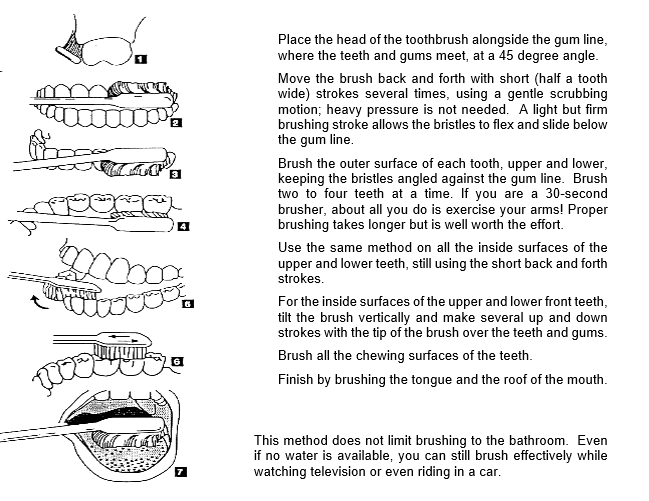
Teeth should always be brushed before going to bed at night as the saliva flow decreases during sleep, while the bacterial activity continues. To ensure that all teeth are brushed properly, a brushing routine or sequence should be established. A thorough job of brushing generally takes two to three minutes, and all surfaces of the teeth should be brushed. The toothbrush bristles should angle toward the gum line with short back-and-forth strokes and gentle scrubbing motions used. The toothbrush should be held vertically to brush the insides of the front teeth. Brushing the top of the tongue removes bacteria and freshens the breath. (See "How to Brush" at the end of this chapter).
Fluoride Toothpaste
Dentists recommend the use of fluoridated toothpaste, which strengthens the tooth enamel. For children younger than 3 years, parents must provide toothpaste in an amount no more than the size of a grain of rice. For children 3 to 6 years of age, parents and caregivers should place no more than a pea-sized amount of fluoride toothpaste.
The single most effective element in the reduction of tooth decay is fluoride. Fluoride makes teeth stronger and increases resistance to tooth decay; it is also an essential nutrient for the growth and development of teeth and bones. It may be found naturally in water, food, and soil. Fluoride is also available through dietary supplements, gels, toothpastes, and mouth rinses.
There are two ways that fluoride is used—systemically and topically.
Systemic fluoride is ingested and enters the bloodstream. The fluoride becomes incorporated into the enamel of the developing teeth, making them more resistant to decay throughout life. Systemic fluoride is obtained from drinking water that has a fluoride content of 1 ppm (parts per million). All water from the tap contains some fluoride. Local water systems are tested to provide the optimal level of fluoride for communities along with having private wells be tested to determine their natural level of fluoride before adding additional fluoride supplements or the use of other fluoride products.
Topical fluoride, applied directly to the enamel surface, helps provide additional protection against decay after the teeth have erupted into the mouth. The decay process can be stopped and even reversed during the initial stages by using fluoride.
There are a number of common methods for applying topical fluorides:
- Most common method is the daily use of fluoride toothpaste.
- Second most common method is fluoride mouth rinse.
- Fluoride may be applied in the form of varnish, gel and rinse by a dentist or dental hygienist or a trained medical provider.
Floss
Floss helps to remove the plaque between teeth, where the toothbrush can’t reach. There are different types of dental floss: soft floss, flat floss, or dental tape.
Flossing removes plaque and debris from between the teeth and at the gum line where the toothbrush can’t reach. Flossing should be done once a day. As with brushing, a regular pattern for flossing should be established to ensure all sides of the teeth are cleaned routinely.
Parents should assist young children as flossing requires a level of manual dexterity that children do not have. Children need parental supervision when flossing usually until ten years of age.
Dental Sealants
Proper Nutrition and Fluoridated Water Consumption
The foods a person eats affect his or her health. Eating nutritious foods provides important nutrients that promote growth and maintenance of body functions, including gum and tooth development. Nutrients, such as protein and vitamins C and A, promote healthy gums. Calcium, vitamin D, and phosphorus are the main components of teeth and bones. To get the necessary nutrients, it is important to eat a balanced diet that consists of a variety of foods.
Certain foods help the teeth grow and maintain healthy gums. They include foods rich in calcium, phosphorus, and vitamin D (e.g., milk and dairy products), in vitamin C (e.g., citrus fruits, broccoli, and strawberries), and in vitamin A (e.g., dark green leafy vegetables, carrots, and yellow squash). Limit snacks between meals, sweet snacks, and habits which allow foods to remain in the mouth for long periods of time (sucking on hard candies or sipping sweet beverages).
Foods high in sugar should be eaten with other foods to reduce the amount of acid exposure. Between-meal snacks should be nutritious and low in sugar. Reading labels on processed foods and recognizing the "hidden" sugars in those foods can help you to choose foods that have the necessary nutrients and promote good oral health. A healthy diet will also contribute to reduced obesity.
A good diet also includes drinking plenty of water. Water from the tap is recommended due to about 76% of New Mexico water systems providing fluoridated water to their customers. Fluoridated water is safe, effective, inexpensive, and it reduces cavities by about 25% in children and adults.
Regular Dental Visits
Dental visits are fundamental in maintaining good oral health. Everyone should visit the dentist at least twice a year, or sooner depending on their risk factors, to make sure they have a proper oral health. Parents should take the child to the dentist stating at the age of 1 year, for an initial checkup and then every six months, for early disease detection, treatment, and/or prevention.
Preventive dental treatments at the dental office include fluoride and the application of dental sealants, oral health education, and a risk-factors assessment for appropriate disease management. Dental professionals can determine the appropriate use of fluoride to prevent or slow the progression of tooth decay.
Dental professionals also can educate parents about healthy behaviors for optimal oral health. According to the American Dental Association, a child’s first dental visit should be before the child's first birthday. By starting dental visits at an early age, children can build a lifetime of good dental habits. Fear of a dentist or dental treatment is a learned behavior. Treating a dental visit as a normal experience is important, especially through the preschool and elementary years. Adults should maintain a calm, relaxed manner that reassures the child.
To prepare for a child's visit to the dentist:
- Be positive. Treat the visit as routine.
- Read the child a book about going to the dentist.
- Familiarize the child with the dental office.
- Make the appointment when the child is rested.
- Answer questions honestly but not too specifically.
- Avoid using bribery or threats in an attempt to encourage good behavior.
- Try not to communicate your own fears to the child.
- Avoid saying negative words such as hurt, shot, pull, or drill.
Dentists and dental hygienists will often use the "Tell, Show, and Do" method during the dental visit: they explain what will be done, then demonstrate what will be done, and finally perform the procedure.
The frequency of a prophylaxis (cleaning) should be based on an individual's needs. A prophylaxis includes removing the calculus (tartar) from the teeth, polishing the teeth to remove the plaque and stains, and flossing. In addition, the teeth should be examined and fluoride may be applied. The dentist uses professional judgment to determine the type, frequency, and extent of each radiographic (x-ray) examination. X-rays should be used only after a dentist considers the patient's history of dental disease and present dental and health needs. X-rays are important in detecting decay between the teeth where it cannot be seen with the naked eye. They show bone loss caused by gum disease as well as teeth that are impacted or abscessed. X-rays are also used to detect problems with the jaw, such as diseases and tumors. X-rays save time, money, and unnecessary discomfort.
School-Based Oral Health Problems
The (ASTDD) recommends the integration of oral health education in the school curriculum as a best practice to reduce oral disease. Oral health education increases knowledge, skills, and positive attitudes towards healthy behaviors and habits. School-based health programs (SBHP) emphasize the need of engage students as active participants in their learning and health and must involve parents, teachers, families, and communities. SBHP target long term outcomes. Better oral health outcomes will enhance overall health, academic outcomes, and quality of life, closing oral health gaps and reducing oral health disparities in New Mexico.
The Whole School, Whole Community, Whole Child model has been developed by the Centers for Disease Control and Prevention (CDC), as a tool to be implemented at school settings. It is a strategic approach to improve oral health of school children, aligning education, public health, and school health sectors, to improve children’s cognitive, physical, social and emotional development.
Dental Emergency First Aid
Consult this section for help in the effective treatment of minor dental emergencies. First aid procedures provide temporary relief. Consultation with a dentist should be sought as soon as possible.
- Toothache with no accident.
- Knocked out permanent tooth.
- Fractured, chipped or broken tooth.
- Loose permanent tooth.
- Uncontrolled bleeding.
- Recurrent, continual or uncontrolled bleeding after extractions.
- Inflamed gums.
- Intruded tooth.
- Possible fractured jaw.
- Canker sores.
- Orthodontic emergencies.
First Aid Supplies
Include these items in your first aid kit for use in dental emergencies. Many of the items are standard supplies. Check this list with the supplies you have available. You may wish to assemble a separate dental emergency kit.
Medications
- Salt (1/4 tsp. per glass of warm water).
- Hydrogen peroxide solution (3%).
- Oil of cloves.
- Orabase with benzocaine.
- Benzocaine ointment.
Other Supplies
- Tooth preserver kit: items included will help preserve a tooth up to 72 hours. Kits are available from school health supply houses. Check with the school nurse supervisor about standard orders or protocol.
- Gloves.
- Cotton.
- Cotton swabs.
- Sterile gauze.
- Soft dental wax (paraffin), available from a local orthodontist.
- Tongue blades.
In the event of an accident to the teeth, tongue, lips, or cheek, perform the following first aid procedures:
- Calm the student and examine the mouth area.
- If necessary, gently rinse the mouth to better observe the situation.
- If there is bleeding, use gloves or some other barrier technique to protect yourself;
- Check for:
- Knocked out tooth;
- Fractured, chipped, or broken tooth;
- Loose tooth (gently wiggle the affected tooth);
- Intruded tooth (tooth has been driven into the supporting soft tissue);
- Upper and lower arches that do not properly come together (alignment is off or one side of the bite does not come together at all), which could indicate a fractured jaw; or
- Uncontrolled bleeding of soft tissue (the tongue, cheeks, lips, and gums).
How to Brush
How to Floss
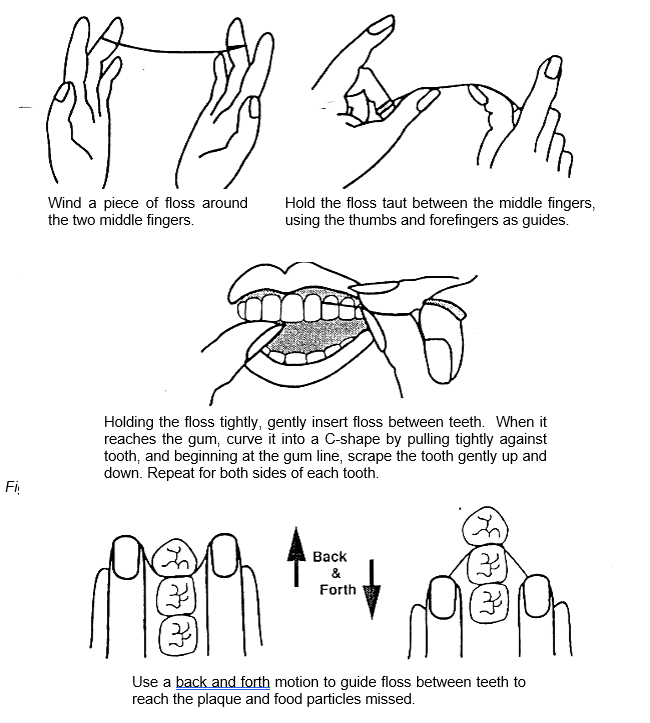
Figure 8: Directions on Flossing
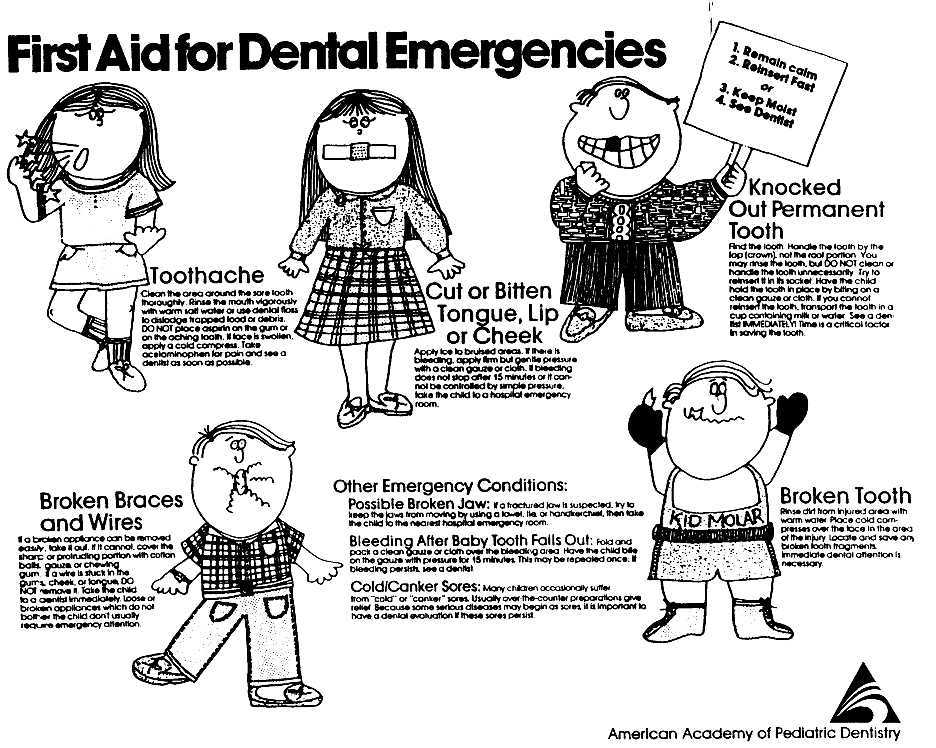
Summary Information for Dental Emergencies
Specific Problems
If any of the above situations is evident, follow the appropriate procedure described below:
| Type of Injury | First Aid |
|---|---|
 Toothache with no accident |
|
| Knocked-out permanent tooth (avulsed tooth)  |
|
 Fractured, chipped, or broken tooth |
|
| Loose permanent tooth |
|
| Uncontrolled bleeding, bitten tongue or lip, or trauma from facial injury |
|
Recurrent, continual, or uncontrolled bleeding after extractions |
|
| Inflamed gums |
|
| Intruded tooth |
|
 Possible fractured jaw |
|
| Canker sores |
|
| Orthodontic emergencies (involving braces)  |
|
Primary Editor: Crista B. Pierce, SW SHA
Secondary Editors: Cheryl Brubaker, Deborah Hollinger, Sonia Garcia Lopez
Resources and References
- American Dental Association. Home Oral Health Recommendations to Reduce the Risk of Caries and Gum Disease. Official ADA Dental Health Recommendations.
- Association of State & Territorial Dental Directors (ASTDD). Best Practice Approaches for State and Community Oral Health Programs. 2017. https://www.astdd.org/bestpractices/wscc-bpar-final-3-2017.pdf.
- Association of State and Territorial Dental Directors (ASTDD). (2012). First Dental Visit by Age One. https://www.astdd.org/docs/first-dental-visit-by-age-one-august-31-2012.pdf.
- Centers for Disease Control and Prevention. (2016). Community Water Fluoridation. https://www.cdc.gov/fluoridation/index.html.
- Centers for Disease Control and Prevention. Oral Health. Protecting Your Children’s Teeth. Children’s Oral Health.
- Centers for Disease Control and Prevention. Oral Health. Dental Sealants. https://www.cdc.gov/oralhealth/dental_sealant_program/index.htm.
- Division of Oral Health: My Water’s Fluoride web application. U.S. Department of Health and Human Services, Centers for Disease Control and Prevention (CDC), National Center for Chronic Disease Prevention and Health Promotion, Atlanta, GA, 2016. http://www.cdc.gov/oralhealth/.
- Griffin SO, Wei L, Gooch BF, Weno K, Espinoza L. Vital Signs: Dental sealant use and untreated tooth decay among U.S. school-aged children. MMWR Morb Mortal Wkly Rep. 2016;65:1141–1145. http://dx.doi.org/10.15585/mmwr.mm6541e1.
- Institute of Medicine. (2011). Advancing Oral Health in America. Washington, DC: The National Academies Press. https://www.nap.edu/read/13086/chapter/1#iv.
- Lena-Puy C. The role of saliva in maintaining oral health and as an aid to diagnosis. Med Oral Patol Oral Cir Bucal. 2006 Aug;11(5):E449–55.
- NIH, National Institute of Dental and Craniofacial Research. Periodontal (gum) disease: Causes, symptoms, and treatments. NIH Publication No. 13-1142, September 2013. https://www.nidcr.nih.gov/sites/default/files/2017-09/periodontal-disease_0.pdf.
- Sol Silverman Jr., MA, DDS. (2003). American Cancer Society Atlas of Clinical Oncology Oral Cancer. Fifth Edition. U.S. Department of Health and Human Services. Oral Health in America: A Report of the Surgeon General — Executive Summary. Rockville, MD: U.S. Department of Health and Human Services, National Institute of Dental and Craniofacial Research, National Institutes of Health, 2000. https://www.nidcr.nih.gov/research/data-statistics/surgeon-general.
- Shetty V., Harrell L., Murphy D. A., Vitero S., Gutierrez A., Belin T. R., Dye B. A., & Spolsky V. W. (2015). Dental disease patterns in methamphetamine users. The Journal of the American Dental Association, 146(12), 875–885. https://doi.org/10.1016/j.adaj.2015.09.012
.