Bloodborne Pathogens – Exposure and Control
This chapter provides guidance to help schools prevent, manage, and document bloodborne pathogen exposure while supporting safe practices for students and staff.
Federal Register
The OSHA (Occupational Safety and Health Administration) website is the complete resource for OSHA information.
The following are abstracts and specific web locations from that OSHA library.
A. Final Rule on Occupational Exposure to Bloodborne Pathogens
Information Date: 12/06/1991 • Federal Register #: 56:64004 • Standard Number: 1910.1030 • Type: Final • Agency: OSHA • Subject: Final Rule on Occupational Exposure to Bloodborne Pathogens • CFR Title: 29
Abstract: OSHA is promulgating a standard to eliminate or minimize occupational exposure to Hepatitis B Virus (HBV), Human Immunodeficiency Virus (HIV), and other bloodborne pathogens. The standard became effective on 3/6/92. Based on a review of the information in the rulemaking record, OSHA has determined that employees face a significant health risk as the result of occupational exposure to blood and other potentially infectious materials (OPIM) because they may contain bloodborne pathogens, including hepatitis B virus, which causes Hepatitis B, and human immunodeficiency virus, which causes Acquired Immunodeficiency Syndrome (AIDS). The Agency further concludes that this exposure can be minimized or eliminated using a combination of engineering and work practice controls, personal protective clothing and equipment (PPE), training, medical surveillance, Hepatitis B vaccination, signs and labels, and other provisions.
B. Toxic and Hazardous Substances
Standard Number: 1910.1030 • Standard Title: Bloodborne Pathogens • SubPart Number: Z • SubPart Title: Toxic and Hazardous Substances
The complete regulation may be downloaded here.
New Mexico State Standards
A. Approval of New Mexico State Standards
Information Date: 10/14/1992 • Federal Register #: 57:47124 • Standard Number: 1953.4 • Type: Notice • Agency: OSHA • Subject: Approval of New Mexico State Standards • CFR Title: 29
Abstract: The New Mexico State Plan provides for the adoption of State standards which are at least as effective as comparable Federal standards promulgated under Section 6 of the Act. The state submitted state standards identical to the following Federal Standards: 1910.1030, Bloodborne Pathogens; 1910.109, Explosive and Blasting Agents; 1910.119, Process Safety Management of Highly Hazardous Chemicals. These standards became effective August 8, 1992, pursuant to New Mexico State Law. Having reviewed the State submissions in comparison with the Federal standards, it was determined that the State standards are identical to the Federal standards and are accordingly approved. The decision is effective October 14, 1992.
B. Standard Interpretations: Most Frequently Asked Questions Concerning the Bloodborne Pathogens Standard
Information Date: 11/01/2011.
Abstract: Federal OSHA authority extends to all private sector employers with one or more employees, as well as federal civilian employees. In addition, many states administer their own occupational safety and health programs through plans approved under section 18(b) of the OSH Act. These plans must adopt standards and enforce requirements that are at least as effective as federal requirements. Of the current 25 state plan states and territories, 23 cover the private and public state and local government sectors, and 2 cover the public sector only.
The full FAQ may be downloaded here.
New Mexico Regulation on Bloodborne Pathogens
Occupational Safety and Health Standards (OSHA) Regulation 29 CFR 1910.1030 requires that employers who have employees with potential occupational exposure develop a written Bloodborne Pathogen Exposure Control Plan. The Bloodborne Pathogen Exposure Control Plan is designed to eliminate or minimize employee exposure.
According to OSHA, occupational exposure is defined as “reasonably anticipated skin, eye, mucous membrane, or parenteral contact with blood or other potentially infectious materials (OPIM) that may result from the performance of an employee’s duties” (Regulation 29 CFR 1910.1030). OSHA has determined that some employees face a significant health risk as the result of occupational exposure. Blood and OPIM are a significant risk because they may contain bloodborne pathogens, including hepatitis B virus (HBV), hepatitis C (HCV), and human immunodeficiency virus (HIV). The agency further concludes that this exposure can be minimized or eliminated using a combination of engineering and work practice controls, personal protective equipment (PPE), training, medical surveillance, hepatitis B vaccination, signs and labels, and other provisions.
Under New Mexico Law (Standard number: 1952.20a), the state standards for occupational exposure to bloodborne pathogens and enforcement requirements meet or exceed federal standards by being at least as effective as federal requirements.
Guidelines
- Each school district must perform an employee exposure determination to identify employees who may incur occupational exposure to blood or OPIM.
- This identification must result in a list of job classifications that may be expected to incur such occupational exposure, regardless of frequency.
- As part of the federal standard, the employer is required to make available, at no cost to the employee, the hepatitis B series of vaccinations if the employee is determined to be at risk for potential exposure.
- Furthermore, the employer must provide all appropriate personal protective equipment (PPE).
- Suggested PPE in the school setting includes gloves, face shield, apron/gown, and goggles.
- A pocket mask/mouth guard should also be available for use by those staff properly trained and certified in its use, such as emergency-response, CPR, or first aid trained employees.
- School districts should designate staff to investigate claims relating to exposures to blood and other body fluids.
- For all bloodborne pathogen exposure incidents, a
Notice of Accident (NOA)
and an E-10 should be filed with the State Department of Education’s Worker’s Compensation Claims Adjuster, who will determine if the claim is compensable under the Worker’s Compensation Law.
See the end of this chapter for these forms from the NMPED. - Staff must be trained within 90 days of hire, then annually thereafter, to be familiar with this policy and abide by its requirements.
More forms are available on the New Mexico General Services Resources webpage.
Needlestick Safety and Prevention Act
The Centers for Disease Control and Prevention estimate that healthcare workers in the United States sustain nearly 600,000 percutaneous injuries annually involving contaminated sharps. An estimated 16,000 of these injuries involve sharps contaminated with blood or OPIM (Other Potentially Infectious Material). It is thought that use of safer devices could prevent about 80% of these injuries.
In response to both the continuous concern over these exposures and the technological developments that may increase employee protection, Congress passed the Needlestick Safety and Prevention Act of 2000.
Under this law, employers must:
- Document consideration and use of appropriate, commercially available, and effective safety devices.
- Solicit input from non-managerial employees responsible for direct patient care regarding the identification, evaluation, and selection of effective engineering controls.
- Document, in the exposure control plan, how this input was received.
- Maintain a detailed sharps injury log.
Employees are expected to:
- Not interfere with the safety features of any device.
- Report all unintentional sticks immediately, even needle sticks with a clean needle.
- Participate in the evaluation of effective engineering controls as these are introduced into their area.
- Share ideas and opinions concerning safer devices by communicating in writing with the appropriate safety officer, giving specific details of the device and any problems or advantages regarding the use of the device.
All reported needle sticks are confidential.
Hepatitis B Vaccination and Post-Exposure Follow-Up
General Policy
- The school district will follow procedures recommended by the New Mexico Public Schools Insurance Authority for bloodborne pathogen exposure follow-up and Hepatitis B vaccination as needed.
- All medical evaluations and procedures will be performed under the supervision of a licensed health care provider and an accredited laboratory for all laboratory tests.
- All evaluations, procedures, vaccinations, and post-exposure management will be provided within a reasonable time, as soon as possible, and according to standard recommendations for medical care.
- Identified high-risk employees will be offered the HBV series of vaccinations as a precautionary measure at the expense of the school district.
- The school district coordinator of risk management or designee will investigate claims relating to bloodborne pathogen exposure and coordinate the follow-up process.
Record Keeping
The employer shall establish and maintain an accurate record regarding bloodborne pathogen risk potential and actual exposure for each employee.
Communication of Hazards to Employees: Labels and Signs
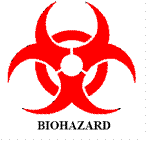
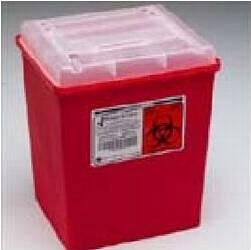
- Warning labels should be affixed to containers of regulated waste containing blood or OPIM and other containers used to store, transport, or ship blood or OPIM.
- Labels should include the BIOHAARD symbol and be fluorescent orange or orange-red with lettering or symbols in a contrasting color.
- Labels should be attached to the biohazard container by string, wire, adhesive, or another method to prevent loss or unintentional removal.
- Red biohazard bags or containers may be substituted for labels, and they should be stored in a regulated area for pickup and disposal.
Employee Information and Training
All school district employees will participate annually in a bloodborne pathogen exposure training. Additional training may occur when changes such as modification of tasks or procedures may affect an employee’s occupational exposure classification.
Employee Bloodborne Pathogen Exposure Training will include a minimum of the following topics:
- Standard Precautions.
- Location of a copy of OSHA's Bloodborne Pathogen Standard 1910.1030.
- Explanation of epidemiology, symptoms, and transmission modes of bloodborne diseases.
- Explanation of this exposure control plan and location where it can be accessed.
- Methods employees should use to recognize tasks involving potential occupational exposure.
- Methods of operation that can prevent or reduce occupational exposure.
- Selection, limitations, location, decontamination, and proper disposal of PPE.
- HBV Vaccine.
- Response mechanism/procedures regarding exposure to potentially infectious materials.
- Post-exposure follow-up responsibilities for exposure.
- Explanation of labels and/or biohazard color-coding system.
- Opportunity for employee to ask follow-up questions and obtain answers during training.
- Training records that will be maintained in the employee’s personnel file.
Exposure Classifications
All school district employees in the following job classifications have been identified as having occupational exposure risk to bloodborne pathogens.
Daily Risk of Exposure
- Nurses/Health Assistants.
- Security Officers.
- Coaches/Athletic Director.
- Special Education Teachers/Assistants.
- Physical Education Teachers/Assistants.
- Custodians.
Occasional Risk of Exposure
- Administrators.
- Classroom Teachers.
- Secretaries.
- Educational Assistants.
- Food Service Workers.
- Maintenance Workers.
- Bus Drivers.
- School Bus Aides.
Students
- Who work with children in nursery.
- Who work as lab assistants.
- Who work in coop programs.
Bloodborne Pathogens Exposure Control Training Outline Sample
I. Purpose and Policy
OSHA 1910.1030 Bloodborne Pathogens Standard was created to provide guidelines for employers to reduce significant risk of infection to employees exposed to infected body fluids, tissue, or equipment.
II. Objectives
- Minimize exposure to infectious materials.
- Effectively treat employees involved in exposure to infectious materials.
III. Covered Diseases
A. HBV (Hepatitis B Virus) – Inflammation of the Liver
- Bloodborne hazard which can survive on dried surfaces at room temperature for up to seven days.
- Symptoms range from jaundice, fatigue, abdominal pain, and loss of appetite to no symptoms at all.
- Infectious through contact with infected blood and some body fluids.
- Rx: vaccine available to reduce or eliminate risk of infection.
B. HCV (Hepatitis C Virus) – Virus Infecting the Liver
- Bloodborne hazard which can survive for long periods of time on inanimate objects.
- Symptoms are jaundice, fatigue, dark urine, abdominal pain, loss of appetite, and nausea.
- Infectious blood-to-blood contact from an infected person to a non-infected person.
- Rx: no vaccine available.
C. HIV (Human Immunodeficiency Virus) – Attacks the Immune System Causing AIDS
- Bloodborne hazard; very fragile virus; 0.3% of exposures result in infection.
- Symptoms are flu-like, including fever, night sweats, glandular swelling, muscle pain, or joint pain.
- Infectious through contact with blood and some body fluids; not transmitted by touching, feeding, or casual contact with an AIDS-infected person.
- Rx: no vaccine to prevent infection.
D. Pathogen Transmission
Routes of Transmission:
- Blood.
- Peritoneal fluid.
- Amniotic fluid.
- Vaginal fluid.
- Cerebrospinal fluid.
- Synovial fluids.
- Pleural fluid.
- Semen.
- Saliva.
- Instruments.
- Needles.
- Personal care items, toothbrushes, razors, or nail clippers.
Entry Points:
- Opening in the skin: cuts, nicks.
- Abrasions.
- Dermatitis.
- Acne.
- Punctures.
- Mucous membranes: eyes, nose.
- Mouth.
- Vagina.
- Rectum.
IV. Definitions
- Biological Waste
- Bloodborne Pathogens
- Contaminated
- Decontamination
- Engineering Controls
- Exposure Incident
- Handwashing Facilities
- HBV
- HCV
- HIV
- Occupational Exposure
- Personal Protective Equipment (PPE)
- Regulated Waste
- Universal Precautions
- Work Practice Controls
V. Exposure Determination Categories
A. Job Categories Determined to be at Greatest Risk of Occupational Exposure
- Nurses/Health Assistants.
- Security Officers.
- Coaches/Athletic Director.
- Special Education Teachers/Assistants.
- Physical Education Teachers/Assistants.
- Custodians.
B. Hepatitis B Vaccination
Hepatitis B vaccination should be offered to classified employees after they have received the required training and within ten working days of their initial assignment.
Except:
- If, through antibody testing, the employee is found to be immune; or
- Vaccination is contraindicated for medical reasons; or
- The employee declines.
VI. Post-Exposure Plan
- Covers all employees exposed in an incident.
- Includes submission of Notice of Accident (NOA-1).
- Covers and requires medical follow-up.
VII. Methods of Compliance to OSHA Standards
A. General
- All body fluids are considered potentially infectious materials.
B. Engineering and Work Practice Controls
- Handwashing.
- Work Practice Controls.
- Proper use, disposal, or decontamination of PPE.
- No eating, drinking, smoking, applying cosmetics or lip balm, and handling contact lenses in contaminated areas.
- No storage of food and drink in potential contaminated area.
C. Personal Protective Equipment
- Gloves.
- Single-use disposable gloves are replaced when torn, punctured, or their ability to function as a barrier is compromised.
- Single-use disposable gloves should not be washed or disinfected for re-use.
- Face protection.
- Face protection should be worn whenever splashes, spray, spatter, droplets, or aerosols of potentially infectious materials might be generated and/or eye, nose, or mouth contamination may be reasonably anticipated.
- Appropriate clothing:
- Type and characteristics will depend upon the task and degree of exposure anticipated.
D. Housekeeping
- All working surfaces, including but not limited to changing tables, toilets, and dining tables, should be decontaminated with an appropriate disinfectant:
- After completion of procedures;
- When surfaces are excessively contaminated;
- As soon as feasible after any spill of potentially infectious materials;
- At the end of each work shift, if contaminated since last cleaning.
- Protective coverings for equipment and environmental surfaces should be removed and replaced at the end of each work shift or when contaminated with potentially infectious materials.
- Receptacles intended for re-use should be cleaned and decontaminated on a regular basis and as soon as possible when visibly contaminated.
- Broken glassware that is potentially infected should be cleaned up using mechanical means, such as brush and dustpan, tongs, or forceps.
E. Handling Sharps
- Guidelines:
- Do not cut, bend, or reinsert used needles into original sheath.
- Discard sharp objects intact into an OSHA-approved sharps disposal container.
- Sharps Disposal Containers:
- Containers should be sealed and replaced when 75% full to protect employees from punctures and/or needle sticks from protruding sharps.
- Filled containers should be placed in a secondary, closable container if leakage is possible.
- Secondary containers should be labeled or color-coded and constructed to contain all contents and prevent leakage during handling, storage, transport, or shipping.
- When moving containers from the area of use, containers should be closed prior to removal and/or replacement and be transported to the holding area identified by the school district for pickup.
F. Regulated Waste
- Regulated waste includes:
- Liquid or semi-liquid potentially infectious materials;
- Contaminated items that would release potentially infectious materials in a liquid or semi-liquid state if compressed;
- Items caked with dried blood or other potentially infectious materials that are capable of releasing these materials during handling;
- Contaminated sharps; and
- Pathological and microbiological wastes containing potentially infectious materials.
- All regulated waste should be placed in containers that can be sealed, labeled with biohazard, color-coded symbol, and constructed to contain contents and prevent leakage of fluids during handling, storage, transport, or shipping.
- If outside contamination of the regulated waste container occurs, it should be placed in a second container with biohazard, color-coded labeling.
- All regulated waste should be disposed of through the school district’s biohazard disposal plan.
VIII. Communication of Hazards to Employees
A. Labels and Signs
- Warning labels should be affixed to containers of contaminated sharps and regulated waste and include the following legend:
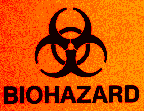
- Labels should be color-coded with fluorescent orange or orange-red, with lettering or symbols in a contrasting color.
- Labels should be affixed as close as possible to the container by string, wire, adhesive, or another method to prevent loss or unintentional removal.
- Red bags or red containers may be substituted for labels.
B. Employee Information and Training
- Employees should be trained:
- At time of initial assignment to tasks where occupational exposure might occur;
- Annually thereafter;
- When assignment of new tasks or procedures occurs that might affect the employee’s occupational exposure risk; and
- Additional training may occur after modification of tasks or procedures.
- A record should be kept on the Training Record form and submitted to Risk Management as required by school district policy.
C. Hepatitis B Vaccination
- Vaccination for Hepatitis B virus will be offered at no cost to all new employees in positions classified as having infectious diseases exposure risk.
- Employees will be required to accept or decline Hepatitis B vaccination to accept employment if hired into a classified position after bloodborne pathogen training occurs and within ten days of assuming responsibilities of a classified position.
Primary Editors: Heather Black, DOH Chief Nurse; Shawna Bailey, LCPS; Kristen Hanson, LCPS; Anne Castillo, LCPS; and Cheryl Brubaker, APS
Secondary Editor: Crista Pierce
Resources and References
Centers for Disease Control and Prevention
- Division of Viral Hepatitis
- National Center for HIV/AIDS, Viral Hepatitis, STD, and TB Prevention,
- Hepatitis B Questions and Answers for Health Professionals | CDC
- Confidential Exposure Incident Report Template
- Hepatitis B Employee Acceptance/Declination Template
- HIV and Occupational Exposure | HIV in the Workplace | HIV/AIDS | CDC
- Hepatitis C Questions and Answers for Health Professionals | CDC
State of New Mexico Worker’s Compensation Administration
United States Department of Labor, Occupational Safety and Health Administration (OSHA)
Documents
-
- Sample Exposure Control Plan
- OSHA Bloodborne Pathogens Reference Guide
- Notice of Accident or Occupational Disease Disablement - English, Spanish
- Employers' First Report of Injury or Illness